Home > Toolkits > How I Feel > Interpretation Guide

How I Feel
Welcome to the Adult Interpretation Guide
A gentle guide for noticing, naming, and responding with care.
This guide is here to gently support your understanding of the feelings a child might be expressing through the What Helped Me toolkit. Each category reflects different emotional states, needs, or signals — from calm and connected to overwhelmed or unsure.
This guide is here to support you, not to judge or correct.

I Feel Proud
This may reflect a sense of achievement, recognition, or growth.
Supportive response: Acknowledge the child’s effort with warmth. Say, “I see how hard you worked,” or simply share the moment. Let pride be felt without explanation.

I Feel Safe
This may signal emotional or physical safety, often after connection or co-regulation.
Supportive response: Honour the feeling. You might say, “I’m glad you feel safe.” Let the child stay in that feeling without needing to move on.

I Feel Calm
This may reflect a sense of internal quiet, safety, or regulation.
Supportive response: Acknowledge the calm gently. You might say, “I see you’re feeling calm — that’s lovely.” No need to ask why — just affirm the moment.

I Feel Okay
This may signal a sense of balance, emotional regulation, or quiet stability.
Supportive response: Honour the calm without pushing for more. Say, “It’s good to feel okay,” and let the child rest in that feeling. No need to elevate or analyse — okay is enough.

I Feel Content
This may show a sense of quiet satisfaction, balance, or emotional ease.
Supportive response: Celebrate the feeling softly. You might say, “It looks like things feel okay right now.” No need to analyse — just be present.

I Feel Loved
This may express emotional connection, warmth, or relational safety.
Supportive response: Reflect the love back. You might say, “You’re loved, and I’m so glad you feel it.” Let the child hold that feeling without needing to explain.

I Feel Silly
This may reflect a playful mood, social safety, or expressive energy.
Supportive response: Join in if invited. Let the child be silly without needing to tone it down — it’s a valid emotional state.

I Feel Playful
This may signal a desire for interaction, imagination, or joyful movement.
Supportive response: Offer playful engagement — games, pretend play, or movement. Avoid framing it as distraction or misbehaviour.

I Feel Curious
This may show a sense of wonder, exploration, or interest in the world.
Supportive response: Encourage gentle discovery. Let the child ask questions or explore without needing to “get it right.”

I Feel Excited
This may express anticipation, joy, or high energy.
Supportive response: Celebrate the excitement. Help the child channel it safely, without dampening their enthusiasm.

I Feel Energetic
This may reflect a need to move, express, or release energy.
Supportive response: Offer movement breaks, dancing, or outdoor play. Let the child regulate through action, not suppression.

I Feel Happy
This may reflect joy, lightness, or emotional ease — often expressed through play, movement, or laughter.
Supportive response: Celebrate the moment with warmth. Join in if invited, mirror their joy, or stay nearby. Let happiness be felt freely, without toning it down or turning it into a task.

I Feel Cross
This may reflect injustice, frustration, or emotional overload.
Supportive response: Acknowledge the feeling without judgment. You might say, “It’s okay to feel cross. I’m here.” Avoid asking for reasons straight away — just offer calm presence.

I Feel Wild
This may signal high energy, dysregulation, or a need to release strong emotions.
Supportive response: Provide safe movement options or sensory outlets. Let the child express without shame — wildness is not misbehaviour.

I Feel Wobbly
This may show emotional instability, confusion, or vulnerability beneath the surface.
Supportive response: Offer grounding and gentle reassurance. You might say, “Things feel wobbly right now — let’s sit together.” No need to fix, just be with.

I Feel Overwhelmed
This may reflect a buildup of emotional, sensory, or cognitive stress — when things feel too much, too fast, or too loud.
Supportive response: Slow everything down. Reduce demands, offer quiet space, and let the child pause without explaining. Say, “It’s okay to take a break,” and stay nearby.

I Feel Frustrated
This may express blocked needs, unmet expectations, or difficulty with control.
Supportive response: Validate the struggle. You might say, “That was really hard.” Help the child name what didn’t work, if they’re ready.

I Feel Angry
This may reflect a strong emotional boundary, a need for justice, or deep hurt.
Supportive response: Honour the anger without fear. You might say, “Anger is okay. Let’s find a safe way to be with it.” Avoid trying to calm too quickly — first, connect.

I Feel Sad
This may reflect emotional heaviness, disappointment, or quiet grief.
Supportive response: Acknowledge the sadness softly. You might say, “It’s okay to feel sad. I’m here.” No need to fix — just be present.

I Feel Worried
This may signal anxiety, uncertainty, or fear of something unknown.
Supportive response: Offer reassurance and safety. You might say, “You’re safe now. We can talk if you want.” Let the child lead.

I Feel Small
This may show vulnerability, shame, or a sense of being overlooked.
Supportive response: Affirm the child’s worth. You might say, “You matter so much.” Avoid minimising — just reflect kindness.

I Feel Tired
This may express emotional exhaustion, sensory overload, or physical fatigue.
Supportive response: Offer rest, quiet, or soft comfort. You might say, “Let’s take a break together.” No need to push through.

I Feel Lonely
This may reflect a need for connection, presence, or emotional closeness.
Supportive response: Sit nearby, offer gentle touch if invited, and remind the child they’re not alone.

I Feel Left Out
This may signal exclusion, social pain, or a need for belonging.
Supportive response: Validate the feeling. You might say, “That must have felt hard.” Invite connection without forcing interaction.

I Feel Brave
This may reflect a moment of courage, effort, or emotional strength.
Supportive response: Acknowledge the bravery. You might say, “That was really brave of you.” Avoid measuring it — just affirm it.

I Feel Strong
This may signal physical or emotional strength, or a sense of capability.
Supportive response: Celebrate the strength. You might say, “You felt strong today — I saw that.” Let the child define what strength means to them.

I Feel Ready
This may show confidence, preparation, or emotional readiness.
Supportive response: Honour the readiness. You might say, “You’re ready, and I believe in you.” Avoid rushing — readiness can be quiet.

I Feel Hopeful
This may express optimism, trust, or emotional openness.
Supportive response: Reflect the hope gently. You might say, “It’s lovely to feel hopeful.” Let the child hold onto that feeling without needing to explain.
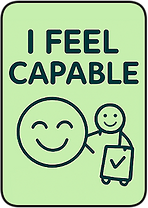
I Feel Capable
This may reflect self-belief, independence, or emotional growth.
Supportive response: Affirm the capability. You might say, “You did that all by yourself — I’m proud of you.” Avoid overpraising — just notice.

I Feel Change
This may signal an internal shift — emotional, sensory, or situational — that feels new, uncertain, or stretching.
Supportive response: Honour the transition. You might say, “It’s okay to feel different inside.” Let the child explore the change without needing to explain or resolve it.

I Need Help
This may reflect emotional overwhelm, confusion, or a quiet call for support.
Supportive response: Offer help gently. You might say, “I’m here if you need me.” Let the child lead — don’t rush to fix.

Lots Of Feelings
This may signal emotional layering — joy, sadness, worry, and more all at once.
Supportive response: Validate the mix. You might say, “It’s okay to feel lots of things at once.” Avoid asking for clarity — just be present.

I Feel Quiet
This may show internal processing, emotional fatigue, or a need for stillness.
Supportive response: Honour the quiet. You might say, “We can be quiet together.” Let the child rest in the silence.

I Feel Confused
This may express uncertainty, emotional fog, or difficulty naming feelings.
Supportive response: Reflect the confusion gently. You might say, “It’s okay not to know.” Offer soft choices or space to pause.

I Don't Know
This may signal a need for delay, emotional distance, or quiet reflection.
Supportive response: Honour the timing. You might say, “We can wait until you’re ready.” Let the child feel in control of their process.

Choose Later
This may reflect emotional ambiguity, avoidance, or a need for time.
Supportive response: Respect the not-knowing. You might say, “We can come back to this later.” No need to push for answers.